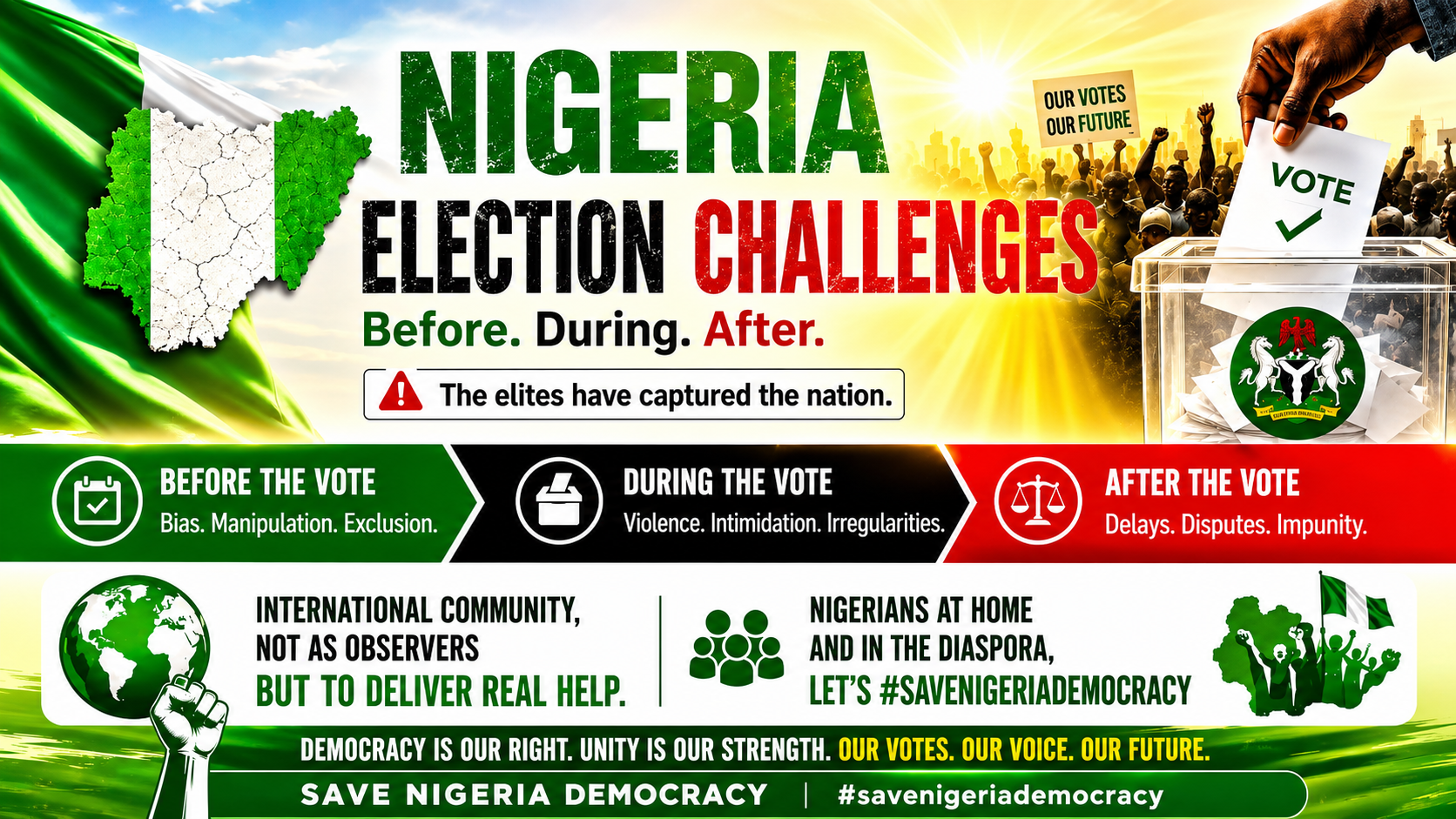
In Nigeria, the phrase “free and fair elections” often rings hollow. For many, it is reduced to a fleeting moment: the casting of a vote, the counting, and the declaration of a winner. But a true election is a sum total of what happens before, during, and after, and in this continuum, Nigeria’s democracy faces its most critical tests.
The pre-election climate in Nigeria is often marred by violence that systematically disenfranchises citizens. In the 12 months preceding the 2023 elections, over 200 violent events involving party supporters were recorded, resulting in nearly 100 fatalities. The scale has grown worse: election-related violence spread from 134 Local Government Areas in 2015 to 274 LGAs in 2023, with fatalities rising from 498 to 948 in the same period. Over 160 deaths were linked to electoral violence between January 2022 and March 2023 alone. This is not mere thuggery; it is a calculated strategy to intimidate voters and manipulate outcomes. Election day itself reveals deeper flaws.
The Independent National Electoral Commission (INEC) introduced the Bimodal Voter Accreditation System (BVAS) and Results Viewing Portal (IReV) to enhance transparency. Instead, technical failures sparked a collapse in public trust. INEC’s credibility score plummeted from 46 to 28, with 70% negative sentiment recorded, and 80% specifically targeting the IReV portal. Observers reported incidents of vote manipulation, ballot box snatching, and attacks on election officials across 22 states. In Lagos, one of Nigeria’s most vote-rich states, violence predictably erupted where it could and should have been prevented. Perhaps most damning is the aftermath. Over 1,500 post-election petitions were filed following the 2023 elections.
While INEC notes that 74% of petitions were dismissed or withdrawn, the sheer volume reflects profound distrust. The result is voter apathy: turnout has declined from 52.3% in 1999 to a historic low of 28.6% in 2023, despite the voter register swelling to 93 million. Can we say Nigeria has free and fair elections? The evidence says no. When violence suppresses participation, technology fails, trust collapses, and barely a quarter of registered voters show up, the process is not an election; it is an anointing. A true election is a sacred covenant: a secure environment, a transparent vote, and an accountable aftermath. Without this holistic view, leaders owe nothing to the people. We know that some among us have stolen public money and are ready to deploy it to subvert our will. We shall resist by all means necessary.
This is not the time to wait for observers, dressed in their finest, to arrive on election day, issue statements, and move on. In this environment, criticism alone, however brilliant, is toothless against the machinery of power. As Marx famously observed, the “weapon of criticism cannot replace the criticism of weapon.” The old rules of voter registration and local rallies are no longer sufficient when the sovereignty of our vote is under siege.
We know that some among us have stolen public money and are ready to deploy it to subvert our will. We shall resist by all means necessary. The international community must act now, before, during, and after the elections, not merely issue platitudes. We must educate our people on the need to take control of their destiny, not just by voting but by defending their votes with vigilance and courage.
Remember: for evil to triumph, righteous men need only do nothing. Nigeria’s democracy must be saved from extinction, and the journey has begun. It begins with you. It begins with me. It begins now.
#SaveNigeriaDemocracy
By Ogbevire Christian Ashaiku (Daddy Kris)
Human Rights Activist &
PhD Law Research Fellow, Middlesex University, London